
The Evolution of Digital Quality: Why Attention is the New Currency for Programmatic Success
Author: Jonathan Chan, Head of Sales, HK, Teads
IAB Hong Kong - Programmatic & Measurement Committee Member
For years, the digital advertising industry has relied on viewability as the gold standard for measuring media quality. Defined by the standard industry thresholds, a viewable impression tells us that an ad had the opportunity to be seen. However, as the regional media landscape grows more saturated and consumer attention spans become increasingly fragmented, marketers are asking a more critical question: Was the ad actually noticed?
In a high-clutter environment where consumers are exposed to thousands of commercial messages daily, standard viewability is no longer a definitive proxy for business growth. This gap has driven the industry toward a major paradigm shift: the adoption of Attention Measurement. While viewability measures technical pixels on a screen, attention measurement evaluates genuine human engagement, quantifying exactly how long a user’s gaze lingers on a creative asset.
As part of the IAB Hong Kong Programmatic and Measurement committee’s commitment to driving innovation, we are advocating for a shift from passive reach to active attention. When brands move beyond baseline metrics and design campaigns around attention, they can significantly reduce media waste, optimize creative performance, and drive tangible business outcomes.
Moving Beyond the Minimum Baseline
To understand why attention matters, we must look at how programmatic trading is evolving. Optimizing solely for viewability can inadvertently incentivize short-form, click-bait, or intrusive environments that meet technical thresholds but fail to register cognitively with the consumer.
Attention measurement introduces sophisticated, privacy-safe methodologies—often powered by predictive artificial intelligence and advanced eye-tracking panels—to determine the actual visual resonance of an ad. By establishing a metric like Attention Per Mille (APM), which measures the volume of attentive seconds generated per thousand impressions, advertisers gain a granular understanding of media quality.
Crucially, this allows programmatic campaigns to move from post-campaign analysis to live, mid-flight optimization, ensuring budgets are dynamically directed toward high-attention environments.
Case Study: Proof of Concept with Asahi Dry Crystal
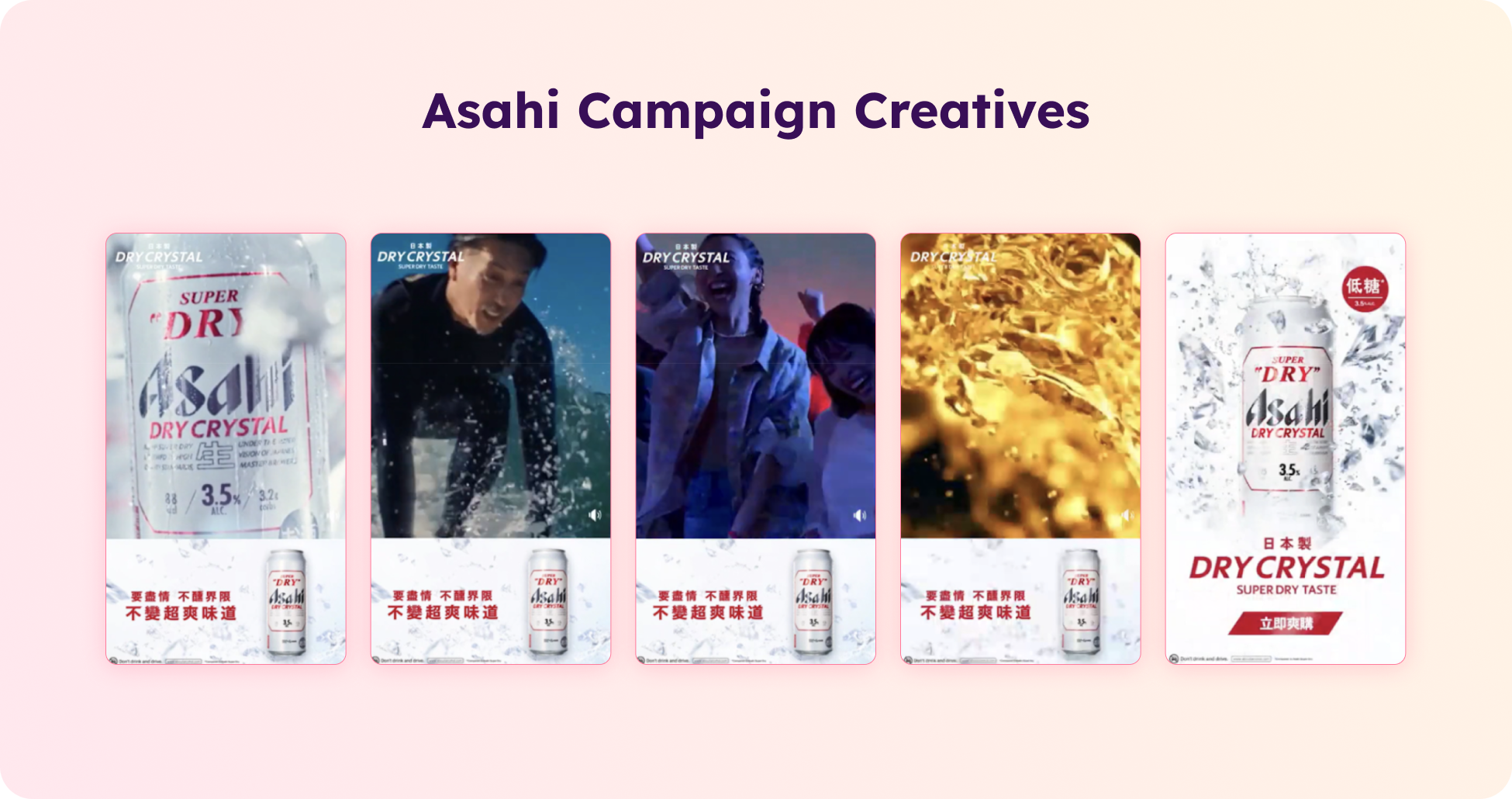
To demonstrate the real-world viability of this framework in the region, a recent landmark campaign for the launch of "Asahi Dry Crystal" was executed in collaboration with Dentsu. This initiative represented a significant milestone: the first-ever Attention-led programmatic campaign launched in Traditional Chinese tailored specifically for the Hong Kong market.
By leveraging an architecture that collaborates with best-in-class Attention measurement leaders, the campaign moved away from standard programmatic buying patterns, anchoring its strategy entirely on maximizing attention and analyzing its correlation with brand lift.

The outcomes of this campaign provide a compelling blueprint for modern programmatic execution:
1. Driving Efficiency Through Dynamic Optimization
Rather than treating attention as a static retrospective metric, the team used mid-flight optimization to continuously refine the media placement and creative deployment based on real-time APM data.
- The Result: The campaign successfully increased its APM by 18% over the course of the flight.
- Creative Performance: Every video asset deployed during the campaign exceeded global attention benchmarks, demonstrating that localized, high-impact formats inherently capture longer dwell times when placed in premium, contextually relevant environment
2. Quantifying the Correlation with Brand Health
The true test of attention measurement is whether higher attentive seconds translate into stronger brand equity. When compared against a qualified control group, the campaign achieved remarkable shifts in upper-funnel metrics:
- Top of Mind Awareness: Recorded a +16pt increase.
- Brand Preference: Achieved a +12pt boost.
These results reinforce an emerging industry truth: quality exposure time is directly proportional to brand memory and mental availability.
3. Moving Consumers Down the Funnel
Beyond awareness, the attention-first approach proved its capability to influence consumer action and intent, bridging the gap between high-quality reach and performance:
- Purchase Intent: Saw a definitive +6pt increase.
- Consumer Sentiment: Post-campaign evaluation revealed that 89% of target drinkers expressed a clear intention to purchase Asahi Dry Crystal following exposure to the advertisements.
The Way Forward for Marketers in Hong Kong
The success of the Asahi Dry Crystal campaign proves that attention measurement is no longer a theoretical concept—it is a practical, scalable, and highly effective programmatic strategy. For brands looking to future-proof their media investments in Hong Kong, the path forward involves moving away from the pursuit of raw, unengaged impressions.
By embracing an attention-first framework and utilizing advanced measurement toolsets, the industry can collectively elevate the standard of digital advertising. Moving forward, the goal should be to build deeper, more meaningful connections with audiences, ensuring that every programmatic dollar spent translates into verified human engagement and measurable business growth.
Author: | |
Jonathan ChanHead of Sales, HK,Teads |  |
Contributor:
| |
 | |
Article launched on 30/07/2026 | |
